
Phonics
Why we use Read, Write Inc
-
- It provides a consistent approach across the school.
-
- It supports early readers to blend sounds into words quickly.
-
- It builds confidence, fluency and a love of reading.
-
- It includes high‑quality storybooks that match each child’s phonic knowledge.

How We Teach Read Write Inc.
All children are assessed regularly by our trained RWI staff so that they can learn in groups with other children working at the same level. This ensures full participation and focused teaching.
Every RWI session is built around five key principles:
-
- Purpose - Every activity has a clear purpose which we share with the children.
-
- Participation - Every child is involved throughout the lesson, with partner work being fundamental.
-
- Praise - We celebrate effort and progress to build confidence.
-
- Pace - Lessons move at a lively pace to maximise learning.
-
- Passion - Our teachers deliver RWI enthusiastically so children stay engaged and motivated.
Our Early Reading Lead monitors the quality of teaching and learning across school and assesses every child at least every six weeks. Assessment helps us identify next steps quickly so that targeted support and timely interventions can take place.
Reception: Learning to Read and Write
In Reception, children learn to read the sounds in words and begin to understand how these sounds can be written down.
Teachers will introduce your child to a toy frog called Fred once he or she is ready to start reading words.
Fred can only say the sounds in a word and needs your child to help him read the word. Fred will say the sounds and children will work out the word. For example, Fred will say the sounds c–a–t, and children will say the word cat. This is Fred Talk: sounding out the word.

Reading
Children will:
-
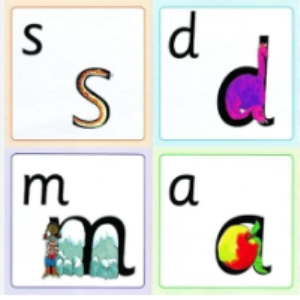
- Learn the 44 sounds and corresponding letters/letter groups using simple picture prompts
-
- Use Fred Talk to blend sounds into words
-
- Read a range of RWI storybooks and non‑fiction texts matched to their phonics level
-
- Work with partners to practise skills
-
- Develop comprehension through ‘Find It’ and ‘Prove It’ questions
Writing
Children will:
-
- Learn to form letters/letter groups using memorable handwriting phrases
-
- Use Fred Talk to spell words
-
- Practise composing sentences out loud before writing them
Read Write Inc. Throughout the Day
Although sounds are formally taught during phonics lessons, two important daily practices help children become fluent readers:
1. Fred Talk and Fred Talk Games
Speaking like Fred helps children hear and blend sounds. Staff use Fred Talk during everyday routines, for example:
“It is time for l-u-n-ch … lunch!”
Instructions follow a consistent routine:
-
Say the word in sounds.
-
Children repeat.
-
Blend together to say the whole word.
2. Pinny Time
Pinny Time helps children keep up, not catch up.
-
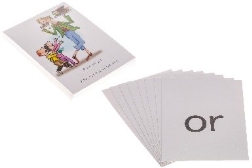
- Staff wear aprons containing Speed Sounds cards.
-
- Short (5‑minute) sessions happen throughout the day.
-
- Children who need extra practice are targeted to increase speed and confidence.
 Year 1
Children continue to follow Read Write Inc., learning more complex sounds and reading books that match their developing reading level.
-
- Daily RWI sessions.
-
- Children are regularly assessed and regrouped accordingly.
-
- A second Speed Sounds lesson takes place each afternoon to build fluency.
-
- Pinny Time continues for children who have sound gaps.
-
- Targeted children receive daily 1:1 tutoring to ensure rapid progress.
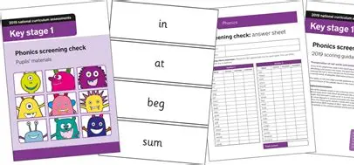
The Phonics Screening Check takes place in June of Year 1, with practice assessments in November, February and April.
Year 2
Once they can read at a speed of at least 90 words per minute, the come off of the RWI programme.
For children who still need phonics support:
-
- RWI continues.
-
- Targeted children receive daily tutoring and interventions.
Any child who did not meet the threshold in Year 1 will retake the Phonics Screening Check in June.
How Parents and Carers Can Help

We greatly value parental involvement in developing children’s early reading skills. You can support by:
-
- Encouraging daily reading practice
-
- Using pure sounds when helping your child blend
-
- Watching helpful RWI videos at home
-
- Talking about books and stories together
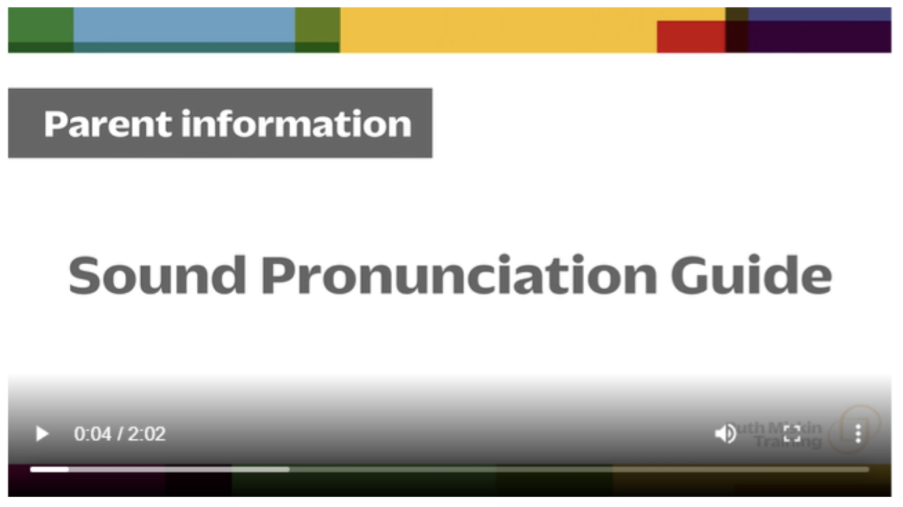
To view helpful parent guides and videos (including how to say pure sounds), please visit:
👉 Parent guide to Read Write Inc. Phonics - Oxford Owl
👉 Learning to read at home - Ruth Miskin Literacy