Science
There is an ambitious curriculum set for Science, supporting teachers to implement it through high-quality lessons and checking that everything is helping children to know more, remember more and do more.
If you would like more information in addition to that published on this page, please contact your class teacher.
Purpose of Study
A high-quality science education provides the foundations for understanding the world through the specific disciplines of biology, chemistry and physics.
Science has changed our lives and is vital to the world’s future prosperity, and all pupils should be taught essential aspects of the knowledge, methods, processes and uses of science.
Through building up a body of key foundational knowledge and concepts, pupils should be encouraged to recognise the power of rational explanation and develop a sense of excitement and curiosity about natural phenomena.
They should be encouraged to understand how science can be used to explain what is occurring, predict how things will behave, and analyse causes.
Aims
The National Curriculum for science aims to ensure that all pupils:
Develop scientific knowledge and conceptual understanding through the specific disciplines of biology, chemistry and physics
Develop understanding of the nature, processes and methods of science through different types of science enquiries that help them to answer scientific questions about the world around them
Are equipped with the scientific knowledge required to understand the uses and implications of science, today and for the future.
Our Approach
Inspirational People
At our school, we believe in using the power of inspiration to help shape the thinking and curriculum design of our students. That's why we have taken inspiration from successful and influential people who have made a significant impact in their respective fields. By studying their stories, we aim to inspire our pupils to aim high and achieve their own goals. We have carefully curated a list of inspirational figures, including scientists, artists, entrepreneurs, and activists, to name a few. We have analysed what made them successful and incorporated their values, principles, and strategies into our curriculum design to provide our students with the tools they need to succeed. By doing so, we hope to empower our students to dream big and achieve greatness.
Intent
We are setting out to help our pupils be ...
- Enquiring - to ask and answer questions about the world around them.
- Curious - to foster a lifelong curiosity and interest in the sciences.
- Resilient - be resilient and reflective scientists. Mistakes are opportunities for learning!
- Confident - children learn key scientific knowledge and vocabulary and use this to understand the world around them.
Implementation
We will do this by ensuring ...
- Children are taught working scientifically and enquiry skills explicitly and this is built upon across the year groups.
- Opportunities for hands-on, real-life experiences.
- Children have access to a broad and engaging curriculum full of real life experiences and enrichment opportunities.
- Children have time to explore, following their own lines of enquiry and reflecting on ideas and methods.
- Children are taught scientific knowledge and skills progressively across the year groups. Children are able to apply maths skills in their scientific learning.
Impact
We will have made a difference when ...
- Children link their learning in science to real life situations and confidently ask and answer questions to find out more.
- Children are excited by their science learning and show they are actively curious to learn more.
- Children are able to plan investigations, record results and explain and reason their findings.
- Children apply scientific knowledge and skills independently (innovate challenges) and use vocabulary correctly.
- Key scientific vocabulary is displayed across the school and shared and supported by parents through the use of knowledge organisers.
Threshold Concepts
These are our big takeaways called ‘threshold concepts’ - an overview of what we want pupils to know. They are the same for every year group and help us to ensure we build learning on the same ideas, that way we help children to be able to remember more meaningful connections rather than remembering isolated facts.
- The human body is complex and it is important to understand how it works and make healthy lifestyle choices.
- It is important to understand how to stay safe when studying science.
- Identifying patterns in scientific processes is key to understanding the world.
- Observing how things change is a key scientific skill.
- Understanding processes at work on Earth.
- Describe and understand phenomena in our world.
- Forces act on objects in a variety of different ways.
- Models can represent scientific ideas and show how things work.
- Results are information that can be interpreted and conclusions drawn from them.
- Recording data is a key aspect of working scientifically so that ideas can be investigated.
- Asking questions is key to scientific enquiry.
- It is important to be able to measure things when conducting experiments in order to get accurate results.
- Being able to plan tests with a clear methodology is an important part of working scientifically.
- Observing carefully, making comparisons and looking for cause and effect.
- Using the properties of materials to sort them and investigate their uses.
- Understanding the importance of grouping and classifying in order to share information.
- Identifying smaller parts of living things and explaining their function as part of the whole organism.
- All living things need food and obtain it in a variety of ways.
- Living things have evolved and adapted in order to survive in different habitats.
- Comparing enables us to draw conclusions about different phenomena and about living things.
- Observing changes helps us to think more deeply about how location and time affect things.
Progression on a Page ...
Here is an overview of what we expect children to be taught, know and do by the end of each year group.
Year R
-
Explore the natural world around them, making observations and drawing pictures of animals and plants. Know some similarities and differences between the natural world around them and contrasting environments, drawing on their experiences and what has been read in class;
-
Understand some important processes and changes in the natural world around them, including the seasons and changing states of matter.
-
Make comments about what they have heard and ask questions to clarify their understanding. Manage their own basic hygiene and personal needs, including dressing, going to the toilet and understanding the importance of healthy food choices.
Year 1
Pupils should be able to ask simple questions and recognise that they can be answered in different ways. They will observe closely, using simple equipment and perform simple tests. They will identify and classify some plants and animals. In addition, they should be able to sort everyday materials and recognise some seasonal changes. Finally, they will be taught to use their observations and ideas to suggest answers to questions and begin to gather and record data to help in answering these questions.
Year 2
Children will now ask more complex questions and be able to make suggestions about how to answer them. They will be able to identify differences between things that are both dead and living and make comparisons. When working with everyday materials, they will begin to think about their properties and how these are useful. Tests will be planned with increasing independence and observations will be made that can be recorded in simple tables.
Year 3
Pupils will now broaden their scientific view of the world around them. They should do this through exploring, talking about, testing and developing ideas about everyday phenomena and the relationships between living things and familiar environments, and by beginning to develop their ideas about functions, relationships and interactions. In biology they should be able to explore the requirements for life and understand nutrition. They also begin to explore the properties of light and how forces act.
Year 4
Children should ask their own questions about what they observe and make some decisions about which types of scientific enquiry are likely to be the best ways of answering them. They will be introduced to phenomena such as sound and electricity and be able to investigate them, making more decisions for themselves. In addition, they will understand how the digestive system works and be able to distinguish between different states of matter. They should now draw simple conclusions and use some scientific language when explaining findings.
Year 5
Pupils will develop a deeper understanding of a wide range of scientific ideas through working more systematically. They should encounter more abstract ideas and begin to recognise how these ideas help them to understand and predict how the world operates. Children will investigate life cycles and the solar system, making comparisons of increasing complexity. They will use scientific methodology to investigate changes in materials and the effect of different types of resistance.
Year 6
Children will independently select the most appropriate ways to answer scientific questions, including observing changes over different periods of time, noticing patterns, grouping and classifying things, carrying out comparative and fair tests and finding things out using a wide range of secondary sources of information. Children will justify their ideas about a broad range of scientific ideas including evolution, electricity, the behaviour of light and the function of the blood and heart. They will use their observations to pose further questions to investigate.
Units of Learning ...
Year 1 - Autumn
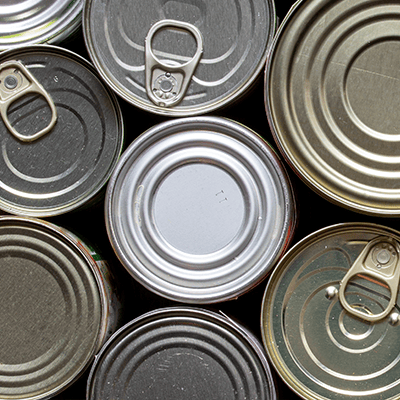
Marvellous Materials
During this project, children learn that objects are made from a range of different materials, each with its own characteristics. They identify a variety of everyday materials and explore where these materials come from. Through simple investigations, children examine the properties of materials and begin to recognise that these properties determine how materials can be used. By observing, comparing and discussing their findings, they develop a clearer understanding of why certain materials are chosen for particular purposes.
Year 1 - Autumn
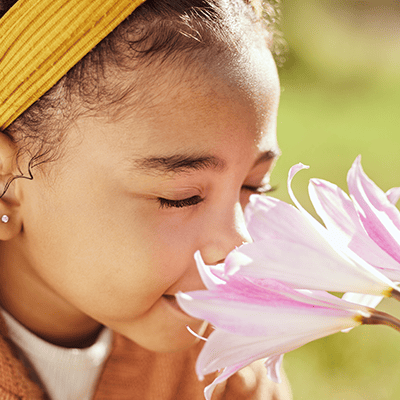
Seeing, Smelling, Sensing
During this project, children learn that humans are a type of animal known as a mammal. They name and count body parts and identify similarities and differences. They learn about the senses, the body parts associated with each sense and their role in keeping us safe.
Year 1 - Summer
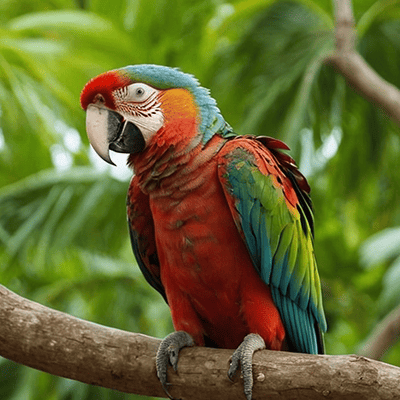
Fur, Feathers and Fins
During this project, children learn about animals, including fish, amphibians, reptiles, birds, mammals and invertebrates. They identify and describe the common body parts of these groups, explore their diets and learn how different animals should be cared for. Through this study, children develop a clearer understanding of the diversity of the animal kingdom.
Year 1 -Summer
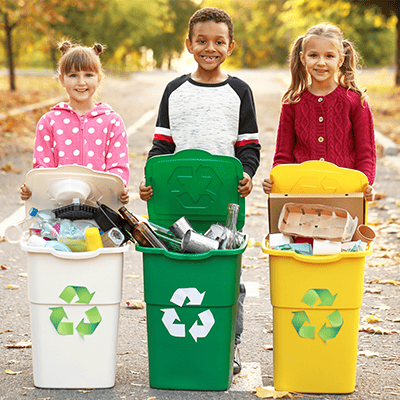
Planet Protectors
During this project, children recap on learning from the autumn term about materials and how they can be sorted based on their properties and origins. They learn the difference between natural and man made materials and explore which everyday materials can be recycled. Children investigate how their school currently manages waste and work together to create posters that encourage the whole community to recycle more effectively.
Year 2 - Spring
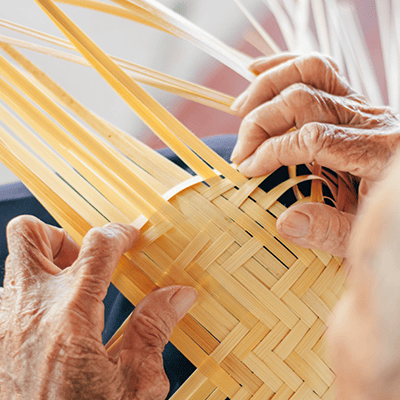
Bend It, Stretch It, Shape It
During this project, children learn about the uses of everyday materials and how their properties make them suitable or unsuitable for specific purposes. Children also begin to explore how materials can be changed, helping them develop a foundational understanding of how materials behave in the world around them.
Year 2 - Spring
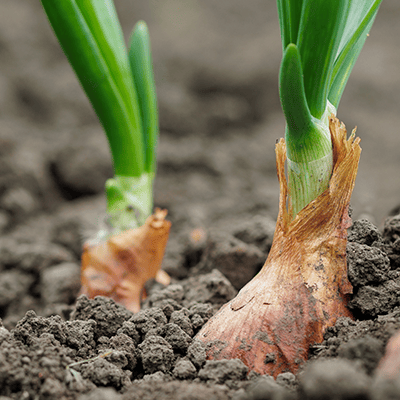
Grow, Thrive and Survive
During this project, children learn how plants grow from seeds and bulbs. They observe plant growth firsthand, recording changes over time and identifying what plants need to grow and stay healthy. Through practical investigation and careful observation, children develop a secure understanding of the conditions that support plant growth.
Year 3 - Autumn
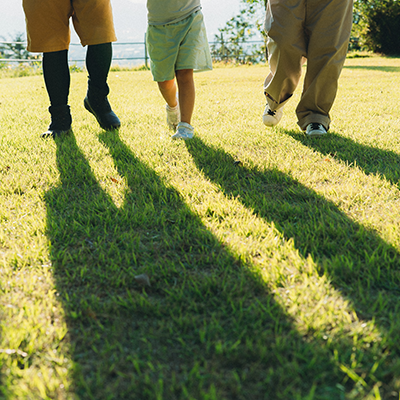
Sunlight and Shadows
During this project, children learn about different light sources and how they differ from reflectors. Children explore how shadows are made, what type of objects make the darkest shadows and how shadows can change, looking for patterns in the data they collect. Children also learn about ultraviolet light and how to protect themselves from it. Finally, they learn how to carry out a fair test to investigate the effectiveness of sunglasses.
Year 3 - Autumn
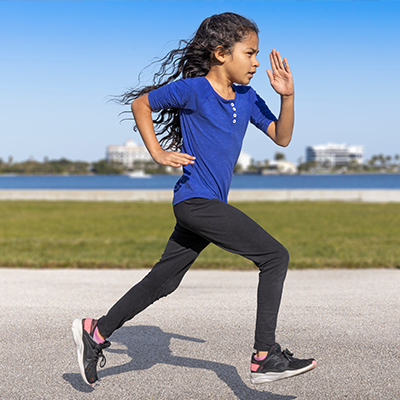
Eat Well, Move Well
In this project, children learn how animals, including humans, survive and stay healthy. They compare the diets of carnivores, herbivores and omnivores, ask scientific questions and use research to spot patterns. Children discover what makes a balanced diet, learn the function of the human skeleton, and investigate how muscles work with the skeleton to help a person move. They carefully examine different skeleton types and use the terms 'vertebrate', 'invertebrate', 'endoskeleton' and 'exoskeleton'.
IMAGE TO COME
Year 3 - Summer
Power Plants: How Plants Live and Grow
More details to follow
IMAGE TO COME
Year 3 - Summer
Sustainable Earth
More details to follow
IMAGE TO COME
Year 4 - Spring
Kingdoms of Life
More details to follow
IMAGE TO COME
Year 4 - Spring
Mission Materials
More details to follow
Year 5 - Autumn
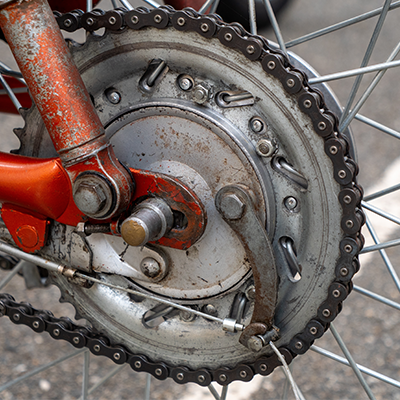
Forces in Motion
During this project, children revisit prior learning about forces and discuss the two types: contact and non-contact forces. They learn about gravity and observe it in action. They revisit learning about friction and design a comparative test to explore its effect. They will learn in detail about the frictional forces of air and water resistance and conduct investigations to observe them in action. They will learn about mechanisms, including gears, pulleys and levers and follow instructions to investigate how these simple machines use forces to make tasks easier.

Year 5 - Autumn
Our Place in Space
During this project, children learn the names of the planets, model their orbits, and investigate Earth and the Moon. They'll discover how evidence proves that the Earth is spherical and explore the phases of the Moon. They'll also find out how Earth's rotation causes day and night, makes the Sun appear to rise in the east, move across the sky and set in the west, and then use equipment to model these ideas.
IMAGE TO COME
Year 5 - Summer
Mix It, Change It
More details to follow
IMAGE TO COME
Year 5 - Summer
Growing Wild
More details to follow
IMAGE TO COME
Year 6 - Spring
Circuits and Symbols
More details to follow
IMAGE TO COME
Year 6 - Spring
The Science of Light
More details to follow
Year 1 - Spring
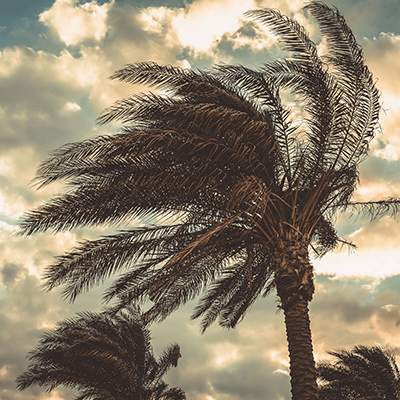
Weather Quest
During this project, children learn about the seasons, seasonal changes and typical weather and events throughout the year. They learn how to measure the weather and explore the role of a meteorologist. Children also begin to understand the science behind day and night and recognise that the seasons have different day lengths in the UK.
Year 1 - Spring
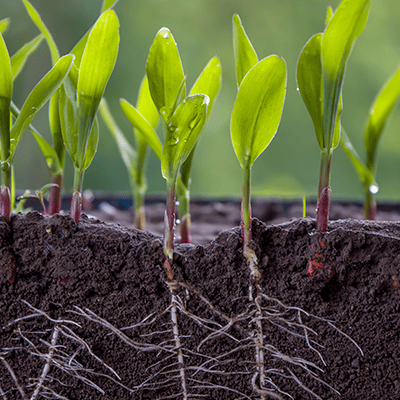
Roots, Shoots and Fruits
During this project, children learn about wild and garden plants by exploring the local environment. They identify and describe the basic parts of plants and observe how these parts change over time. Through hands on investigation, children begin to develop a clear understanding of how plants grow and function.
Year 2 - Autumn
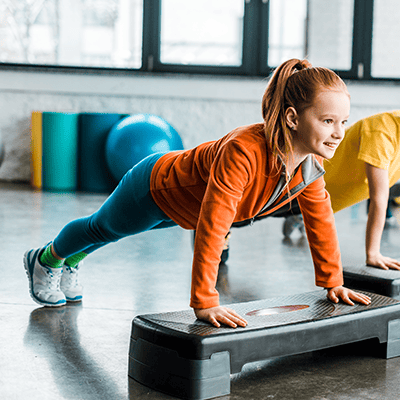
Healthy Humans
During this project, children will learn about the basic human needs for survival, including the importance of exercise, nutrition, and good hygiene. They learn how human offspring grow and change over time into adulthood.
Year 2 - Autumn
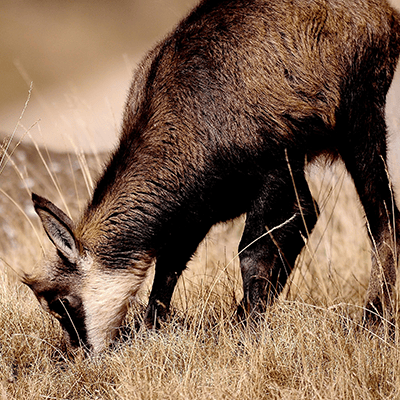
Homes, Hides and Habitats
During this project, children learn about habitats and what they provide for the plants and animals that live there. They explore local habitats to identify and name living things and begin to understand how they depend on one another for food and shelter. They also learn about food chains, adaptations for survival and investigate the effectiveness of camouflage.
Year 2 - Summer
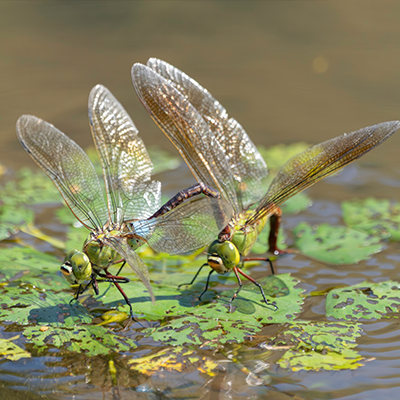
Hide, Hunt and Survive
During this project, children learn about growth in animals by exploring the life cycles of familiar insects. Building on their understanding of human survival, children identify the basic needs of animals, including food, water, air and shelter, and learn how these needs support healthy growth and development.
Year 2 - Summer
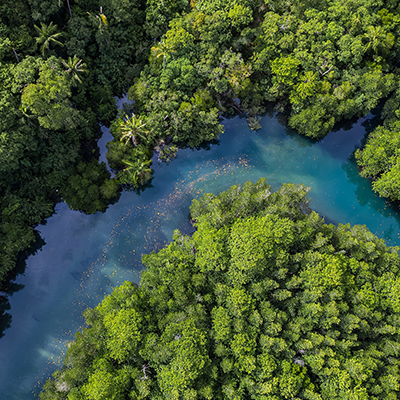
Mangrove Mission
This project will help children to answer the question, ‘How can we protect the world's mangrove forests and the plants and animals that live there?’ Children will learn what a mangrove forest is and why it is an important habitat. They will explore and create mangrove forest food chains, and use the terms producer, consumer, predator and prey as they work. They will then investigate how mangrove roots affect soil erosion, discover how human activity can harm mangrove forests, and consider the consequences. Finally, they learn how people can help protect these vital habitats and use technology to create a video to share their understanding with others.
IMAGE TO COME
Year 3 - Spring
Force and Friction
More details to follow
IMAGE TO COME
Year 3 - Spring
Feel the Force!
More details to follow
Year 4 - Autumn
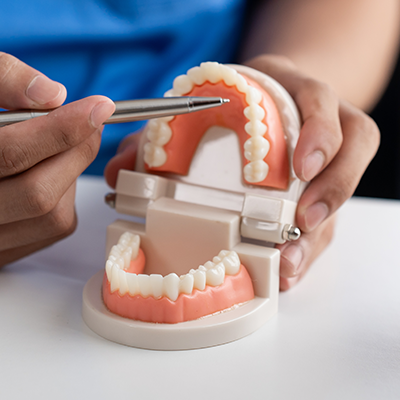
Eat, chew, digest
During this project, children learn about food chains and food webs, exploring what these scientific diagrams show and how they compare. They revisit interdependence and chat about how living things rely on each other. They also explore the human digestive system, teeth types and oral hygiene. Finally, they investigate how effective toothpaste is at protecting teeth.
Year 4 - Autumn
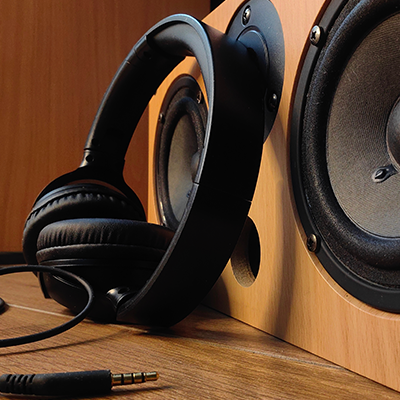
The Science of Sound
During this project, children learn that sounds are vibrations travelling from sound sources, such as a person's vocal cords, musical instruments and machinery, through solids, liquids or gases to the ears. They explore how instruments make sounds, investigate pitch, volume, distance and direction, use a sound meter, change pitch in different ways and use enquiry to explain the fascinating science of sound.
IMAGE TO COME
Year 4 - Summer
Power Up!
More details to follow
IMAGE TO COME
Year 4 - Summer
Oceans Alive
More details to follow
IMAGE TO COME
Year 5 - Spring
Growing, Changing, Living
More details to follow
IMAGE TO COME
Year 5 - Spring
Materials Matter
More details to follow
Year 6 - Autumn
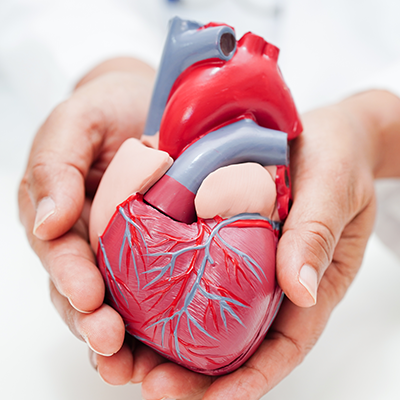
The Journey of Blood
During this project, children learn about the role of the circulatory system and its main parts, carrying out research to answer their own questions. They look closely at the heart's structure, functions and features; explore blood by preparing a representation of a separated sample; learn how each blood vessel works; and discover how diet, exercise and drugs affect the body.
Year 6 - Autumn
Evolving Earth
During this project, children learn what fossils are, revisit how they form and explore how the fossil record helps us understand living things. They discuss evolution and the work of Charles Darwin and Alfred Russell Wallace, learning that life on Earth is related and has changed over time. Children learn about inheritance, variation, adaptation, natural selection and survival of the fittest, before investigating plant and animal adaptations and creating a museum exhibit to show how a species has adapted to survive.
IMAGE TO COME
Year 6 - Summer
Ice, Life and Survival
More details to follow
IMAGE TO COME
Year 6 - Summer
Species Under Threat
More details to follow

